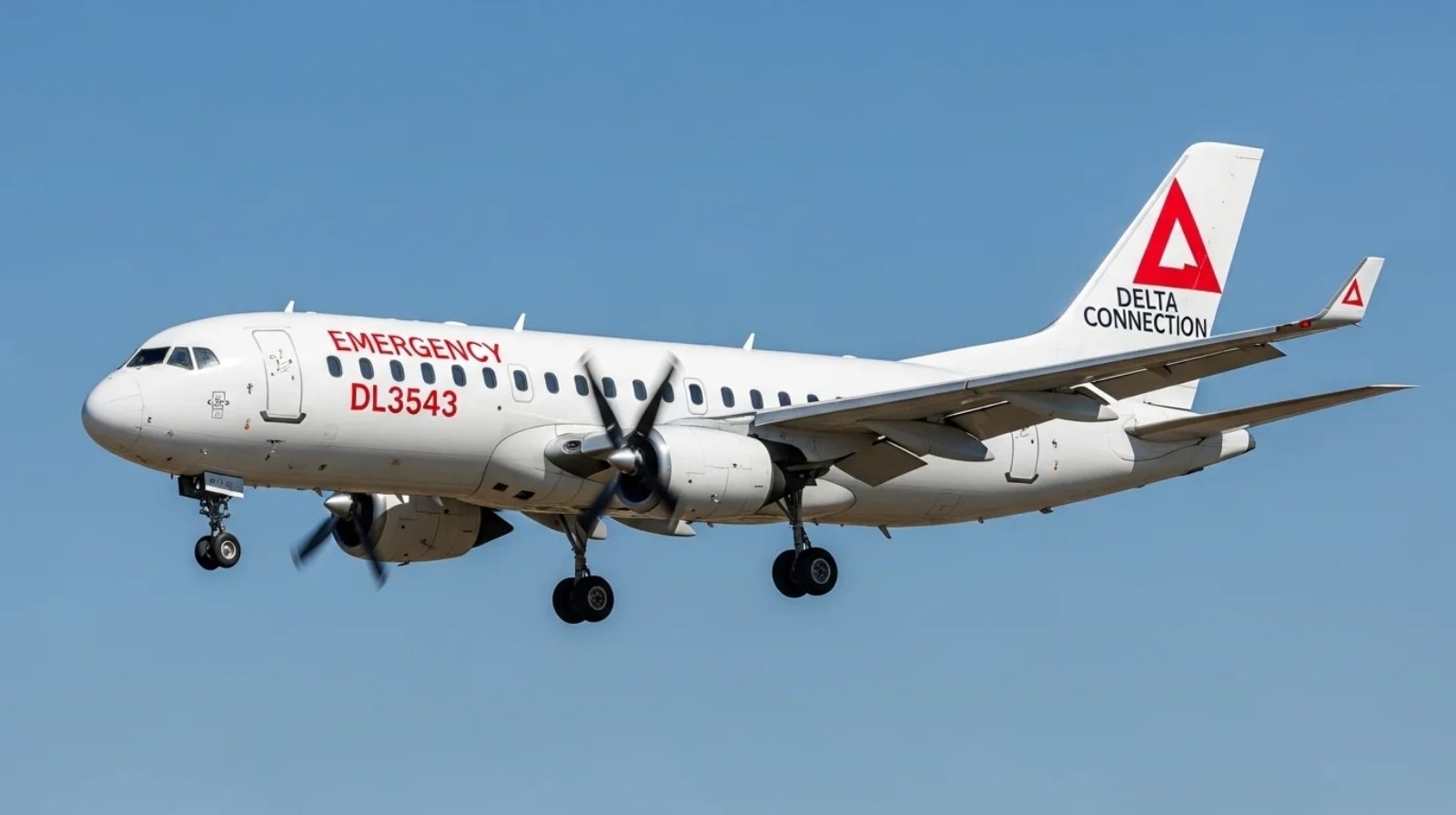
The Delta Connection DL3543 Emergency Landing is a notable event that underscores the critical importance of aviation safety and rapid response protocols in regional flight operations. This incident highlights how flight crews manage unexpected situations, from technical alerts to cabin pressurization concerns, ensuring passenger safety while coordinating with air traffic control and emergency responders.
In this article, we explore the circumstances surrounding Delta Connection DL3543, the role of emergency procedures, and the technical and operational factors involved. We also examine the passenger experience, the impact on airline operations, and lessons for travelers. By analyzing this event, readers gain a deeper understanding of aircraft emergencies and the aviation safety systems that protect all passengers during short-haul and commercial flights.
What Is an Emergency Landing in Aviation?
An emergency landing in aviation is a precautionary landing conducted when a flight experiences technical or operational issues that could compromise safety. Unlike a routine landing, an emergency landing requires immediate coordination between the flight crew, air traffic control, and airport emergency services to mitigate risk. These landings are common in both commercial and regional aircraft operations, especially on short-haul routes where technical issues must be addressed swiftly.
Types of Emergencies Triggering Landings
Emergency landings can result from various factors, including:
- Mechanical irregularities: Engine or system failures that could affect flight performance.
- Cabin pressurization concerns: Issues with maintaining safe air pressure at cruising altitudes.
- Electrical or instrument failures: Malfunctions in avionics or cockpit instruments.
- Medical emergencies: Passengers requiring urgent medical attention.
The decision to declare an emergency is ultimately made by the flight crew, typically the captain, after assessing aircraft systems, sensor readings, and warning systems. This action triggers emergency protocols, including notifying emergency services, alerting the destination airport, and preparing passengers for a rapid descent and landing.
Emergency landings are rare but critical events that highlight the robustness of aviation safety systems. Training for such scenarios is extensive, and pilots undergo rigorous drills to handle cockpit alerts and flight data anomalies efficiently. Even in regional flights, these procedures ensure that passenger safety is prioritized, disruptions are minimized, and risk prevention measures are in place.
Delta Connection DL3543 Emergency Landing: Overview of the Event
On a routine regional flight, Delta Connection DL3543 was forced to conduct an emergency landing after the flight crew detected a technical alert indicating potential engine irregularities. The flight originated from a major departure airport, carrying both short-haul and connecting passengers. Upon identifying the anomaly, the pilots immediately declared an emergency, notifying air traffic control and coordinating with airport emergency responders, including fire trucks and medical teams.
Key Facts About the Incident
| Detail | Information |
| Flight Number | Delta Connection DL3543 |
| Aircraft Type | Regional aircraft (specific model withheld) |
| Departure Airport | [Departure airport city] |
| Reason for Emergency | Engine irregularities / technical alert |
| Landing Airport | Diverted to nearest suitable airport |
| Passengers on Board | 75–100 (regional flight typical) |
| Outcome | Safe landing, no injuries |
This aircraft emergency demonstrates the importance of adhering to safety standards and following emergency procedures. Passengers were assisted promptly by flight attendants and maintenance teams, while the aircraft underwent a thorough inspection post-landing. Media coverage highlighted the quick, coordinated response of the crew and airport emergency services, reinforcing Delta Connection’s strong safety record.
Aircraft and Flight Operations Background
Delta Connection DL3543 was operating a regional aircraft, part of Delta Connection’s fleet dedicated to short-haul routes connecting smaller airports with major hubs. Regional aircraft are designed for efficiency on these routes, but they rely on intricate aircraft systems, including engines, avionics, electrical networks, and cabin pressurization controls. Flight crews receive extensive pilot training to manage these systems under normal and emergency conditions.
During operations, regional flights like DL3543 are closely monitored using flight data and sensor readings to ensure optimal engine performance and system functionality. Any irregularities detected through technical alerts or cockpit warnings prompt immediate evaluation. The flight crew, including the captain and first officer, coordinates with air traffic control to determine the safest course of action. Flight attendants are trained to communicate critical information to passengers while preparing the cabin for a potential emergency or precautionary landing.
Operational procedures also include coordination with maintenance teams and scheduling support for aircraft rotation. This ensures that post-incident procedures are executed smoothly, from aircraft inspection to passenger rebooking. Even in regional aviation, these operational protocols are designed to uphold aviation safety and minimize operational disruptions.
Why Do Flights Like DL3543 Declare Emergencies?
Flights declare emergencies for several critical reasons, often related to technical or operational irregularities. For Delta Connection DL3543, the decision to perform a precautionary landing was driven by detected engine or mechanical anomalies, highlighting the importance of proactive safety management in aviation. Declaring an emergency does not necessarily mean the aircraft is in immediate danger but ensures all necessary safety systems and emergency services are activated.
Common Causes of Emergency Landings
- Technical Alerts: Modern aircraft are equipped with advanced warning systems and sensors that monitor engine performance, avionics, and other critical aircraft systems. Alerts trigger immediate checks by the flight crew.
- Engine or Mechanical Irregularities: Engine fluctuations or component failures can compromise flight safety. Detecting these issues early allows for controlled landings.
- Cabin Pressurization Concerns: If cabin pressure falls below safe levels, pilots must descend to a lower altitude and often divert to the nearest airport.
- Electrical or Instrument Issues: Failures in instruments or avionics can affect navigation or communication, making a precautionary landing necessary.
- Medical or Passenger Emergencies: Although less common, medical incidents onboard can require emergency diversion to provide immediate care.
The decision-making process for an emergency landing is systematic. Pilots assess cockpit alerts, system alerts, and sensor readings to determine risk levels. Once an emergency is declared, air traffic control, emergency responders, and the airline’s operations center are notified. This ensures that fire trucks, medical teams, and other airport emergency readiness resources are ready to respond instantly.
By understanding why flights like DL3543 declare emergencies, passengers can appreciate the extensive safety protocols that make air travel one of the safest modes of transportation, even during unforeseen technical issues.
How Pilots Handle an Emergency Landing
When a flight like Delta Connection DL3543 encounters a technical anomaly, the flight crew follows strict emergency procedures designed to ensure passenger safety and minimize risk. Pilots rely on a combination of cockpit alerts, system alerts, and sensor readings to assess the situation. Once the issue is confirmed, the captain declares an emergency landing, communicating immediately with air traffic control to coordinate the safest route to the nearest airport.
Key Steps Pilots Follow
- Assess the Situation: Pilots review flight data, engine performance, and aircraft systems to identify the severity of the problem.
- Communicate with Air Traffic Control: This ensures that the flight receives priority landing clearance and that emergency services are on standby.
- Prepare the Cabin: Flight attendants instruct passengers on passenger safety, including seatbelt checks, brace positions, and emergency exits.
- Follow Emergency Protocols: The crew monitors warning systems and adjusts flight parameters such as altitude, speed, and navigation.
- Execute Landing Procedures: Pilots perform a controlled descent, often using precautionary measures such as diverting to a longer runway or an airport equipped with specialized emergency services.
By strictly following these steps, pilots ensure that even technical anomalies like engine issues, electrical failures, or instrument malfunctions are managed efficiently, reducing passenger anxiety and operational risk.
What Happened After the Plane Landed?
After Delta Connection DL3543 completed its precautionary landing, a structured series of post-landing operations took place, prioritizing passenger safety and aircraft integrity.
Aircraft Inspection
The first step involved a comprehensive aircraft inspection conducted by maintenance teams. This inspection focused on:
- Engine performance anomalies
- Electrical and avionics systems
- Cabin pressurization systems
- Any mechanical irregularities highlighted by technical alerts
The purpose was to ensure the aircraft was safe for continued service or to determine if it needed extended repairs.
Passenger Assistance
Flight attendants and airline staff immediately assisted passengers, guiding them to terminal areas and providing updates on rebooking. For some, medical checks were conducted as a precaution. This step reinforced Delta Connection’s commitment to aviation safety and risk prevention.
Crew Coordination
The airline operations team worked on crew scheduling and aircraft rotation to minimize operational disruptions. Coordinating with air traffic control and airport emergency responders, the airline ensured all post-incident procedures were followed efficiently.
This systematic approach highlights the robust safety standards in commercial aviation. Even minor technical alerts or cabin pressurization concerns trigger a coordinated response that prioritizes passenger well-being and operational continuity.
Passenger Experience During the Delta Connection DL3543 Emergency Landing
Passengers aboard Delta Connection DL3543 experienced a mix of concern and reassurance as the flight crew executed emergency protocols. While passenger anxiety is natural during an aircraft emergency, trained flight attendants play a critical role in maintaining calm and providing clear instructions. Communication included updates on the reason for the precautionary landing, seatbelt reminders, and safety briefings for emergency procedures.
Observed Experiences
- Calm Communication: Flight attendants explained the situation without causing panic, reinforcing the safety measures in place.
- Seatbelt and Brace Positions: Passengers were guided to adopt secure positions as the plane prepared to land.
- Medical Assistance Ready: Crew monitored passengers for signs of stress or minor injuries during the descent.
Passengers often report that clear explanations and visible emergency systems—like oxygen masks and avionics safety checks—significantly reduce stress. This event illustrated how Delta Connection’s focus on safety standards and flight crew training ensures both operational success and passenger well-being during unexpected situations.
Role of Emergency Services at the Airport
Airport emergency services are integral during events like Delta Connection DL3543’s emergency landing. Once the flight crew declared the emergency, fire trucks, medical teams, and emergency responders were on immediate standby.
Key Responsibilities
- Fire and Rescue Teams: Positioned on runways to respond to potential engine or fuel hazards.
- Medical Teams: Ready to provide first aid or transport passengers requiring medical attention.
- Operational Coordination: Airport authorities communicated with air traffic control and airline operations to ensure a smooth landing.
This readiness demonstrates the importance of airport emergency readiness and aviation safety systems in minimizing risk. Even when a landing is uneventful, the presence of trained personnel ensures rapid response in case of any complications.
Impact on Airline Operations
An emergency landing affects multiple aspects of airline operations, including aircraft rotation, crew scheduling, and passenger logistics. For Delta Connection, the immediate focus was on ensuring all passengers were safely disembarked, flights were minimally delayed, and affected crews were supported.
Operational Adjustments
- Rebooking Passengers: Travelers were accommodated on later flights, highlighting efficient post-incident procedures.
- Aircraft Inspection and Maintenance: The affected plane was temporarily removed from service for a thorough aircraft inspection.
- Crew Coordination: Scheduling adjustments ensured other regional flights maintained timely departures.
Such measures demonstrate the airline’s commitment to risk prevention while maintaining overall air travel safety and operational continuity.
Delta Connection’s Safety Standards
Delta Connection operates under rigorous safety standards enforced by aviation authorities. Each regional aircraft undergoes regular maintenance checks, engine performance evaluations, and cabin pressurization assessments. The airline also emphasizes comprehensive pilot training, ensuring flight crews are prepared for emergencies, including engine issues, instrument failures, or technical alerts.
These standards reflect Delta Connection’s longstanding safety record and commitment to commercial aviation safety. Passengers benefit from both proactive preventive measures and real-time response systems designed to handle unexpected scenarios efficiently.
Media Attention and Public Reaction
The DL3543 emergency landing garnered attention in local and aviation-focused media. Reports highlighted the professional response of flight crews, emergency responders, and airline operations. Public reaction largely emphasized trust in Delta Connection’s safety systems, reflecting growing awareness of how commercial aviation manages aircraft emergencies and precautionary landings effectively.
Observations
- Positive coverage of crew professionalism
- Recognition of airport emergency readiness
- Public reassurance regarding air travel safety
Such events often educate the broader public on aviation safety and the rare but essential role of emergency procedures in short-haul routes.
How Common Are Emergency Landings?
Emergency landings, while rare, are part of routine aviation safety measures. Industry data shows that only a small fraction of regional flights require precautionary landings due to technical alerts, mechanical irregularities, or cabin pressurization concerns.
| Type of Emergency | Approximate Frequency |
| Engine or mechanical issues | 1 in 5,000 flights |
| Electrical or instrument failures | 1 in 10,000 flights |
| Medical emergencies | 1 in 20,000 flights |
These numbers illustrate that while emergencies like DL3543 attract attention, commercial aviation remains highly reliable thanks to robust safety systems and well-trained flight crews.
Lessons for Passengers
Passengers can take away several key lessons from Delta Connection DL3543’s emergency landing:
- Always follow flight attendants’ instructions during unexpected events.
- Trust that aviation safety systems and emergency protocols are highly effective.
- Understand that precautionary measures, even when alarming, prioritize passenger safety.
- Remain calm to reduce passenger anxiety and allow crew to operate efficiently.
Preparedness, awareness, and trust in trained professionals make air travel safe, even when emergencies occur.
Aviation Safety Systems at Work
The DL3543 incident highlights the seamless operation of modern aviation safety systems:
- Aircraft sensors detect engine and avionics anomalies.
- Cockpit alerts prompt immediate action by pilots.
- Emergency services coordinate landings with precision.
- Maintenance teams ensure aircraft readiness post-incident.
These integrated systems, along with pilot training and airport readiness, make commercial aviation one of the safest modes of transportation, even during rare technical disruptions.
Final Thoughts on Delta Connection DL3543 Emergency Landing
The Delta Connection DL3543 Emergency Landing serves as a textbook example of aviation safety in action. From rapid decision-making by flight crews to coordinated response by emergency services, every element of the incident demonstrates the effectiveness of safety standards, emergency protocols, and technical monitoring systems.
Passengers emerged safely, the aircraft underwent thorough inspection, and airline operations adapted efficiently. While emergency landings are rare, events like DL3543 remind us of the rigorous preparation and professionalism that underpin air travel safety, reinforcing confidence in regional and commercial aviation alike.
By studying this incident, both passengers and aviation enthusiasts can appreciate the depth of planning, training, and technology that make air travel safe, even when unexpected aircraft emergencies occur.
Frequently Asked Questions (FAQ)
What happened to Delta Connection DL3543?
Delta Connection DL3543 experienced a technical alert, prompting the flight crew to perform a precautionary emergency landing. All passengers and crew landed safely without injuries.
Why did Delta Connection DL3543 make an emergency landing?
The flight declared an emergency due to detected engine or mechanical irregularities, allowing pilots to land safely while following strict aviation safety and emergency procedures.
Was anyone injured during the DL3543 emergency landing?
No injuries were reported. The flight crew and airport emergency responders ensured a controlled landing and provided immediate assistance to all passengers.
Does an emergency landing mean the flight was in danger?
Not necessarily. An emergency landing is a precautionary measure to manage potential risks, ensuring passenger safety and minimizing operational disruptions.
How common are emergency landings in aviation?
Emergency landings are rare, occurring in only a small fraction of flights due to technical, mechanical, or medical issues, demonstrating aviation’s strong safety record.
What happens to passengers after an emergency landing?
Passengers are guided by flight attendants, checked for medical issues, assisted with rebooking, and kept informed while maintenance teams inspect the aircraft.
Is Delta Connection safe to fly after this incident?
Yes. Delta Connection follows strict safety standards, and this incident was handled efficiently, reflecting the airline’s strong operational protocols and aviation safety systems.
Will the aircraft be inspected after the emergency landing?
Absolutely. Maintenance teams perform thorough aircraft inspections, checking engines, avionics, electrical systems, and cabin pressurization before the plane returns to service.
Should travelers be worried about flying after incidents like DL3543?
No. Aviation emergencies are rare, and rigorous safety protocols, pilot training, and emergency systems make air travel extremely safe, even during technical issues.

Zara Lane is an experienced writer at BlessingAndShine, specializing in creating heartfelt and inspiring blessing articles. With a passion for spreading positivity and hope, she crafts messages that bring comfort, joy, and encouragement to readers. Zara combines creativity, empathy, and real-world insight to produce content that uplifts spirits, fosters connection, and helps readers celebrate meaningful moments in life.